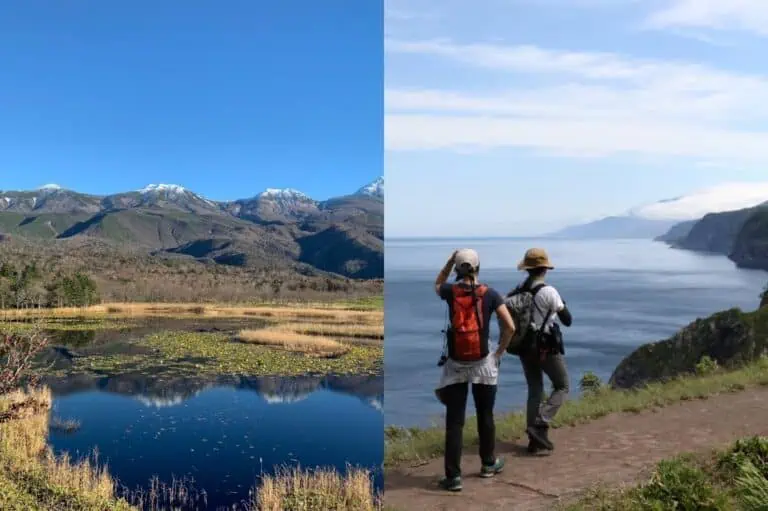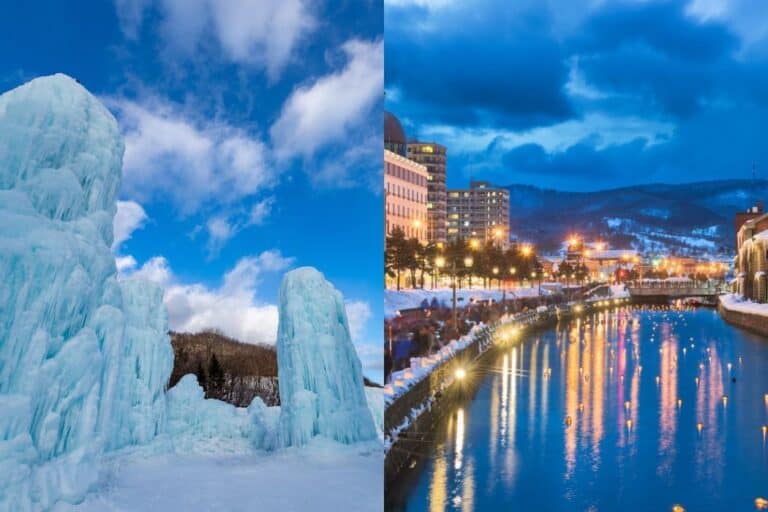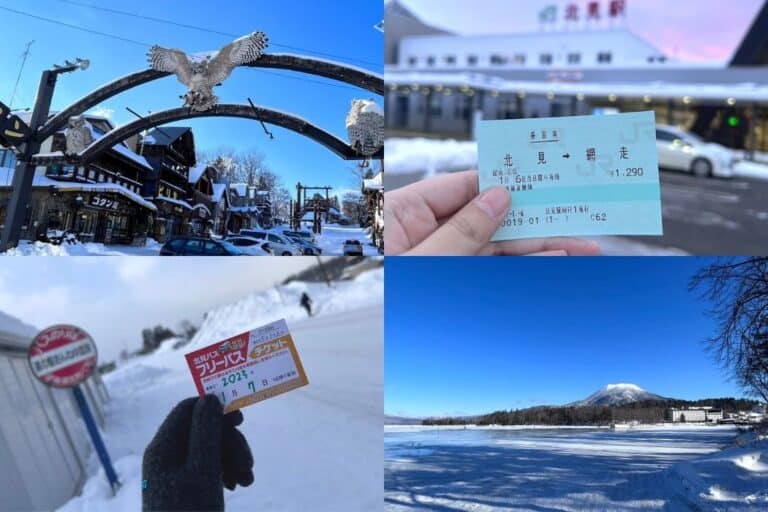
7-Day Hokkaido Winter Itinerary for Nature Lovers

Planning a winter trip to Hokkaido is difficult. Many travelers come to me and ask for my help to figure out their way.
So here, I made a 7-day itinerary that’s easy to follow!
This itinerary is…
- Perfect for nature lovers – Full of winter outdoor activities.
- Car-free – You’ll take public transportation only.
- No big cities – You’ll find beautiful rural areas of Hokkaido.
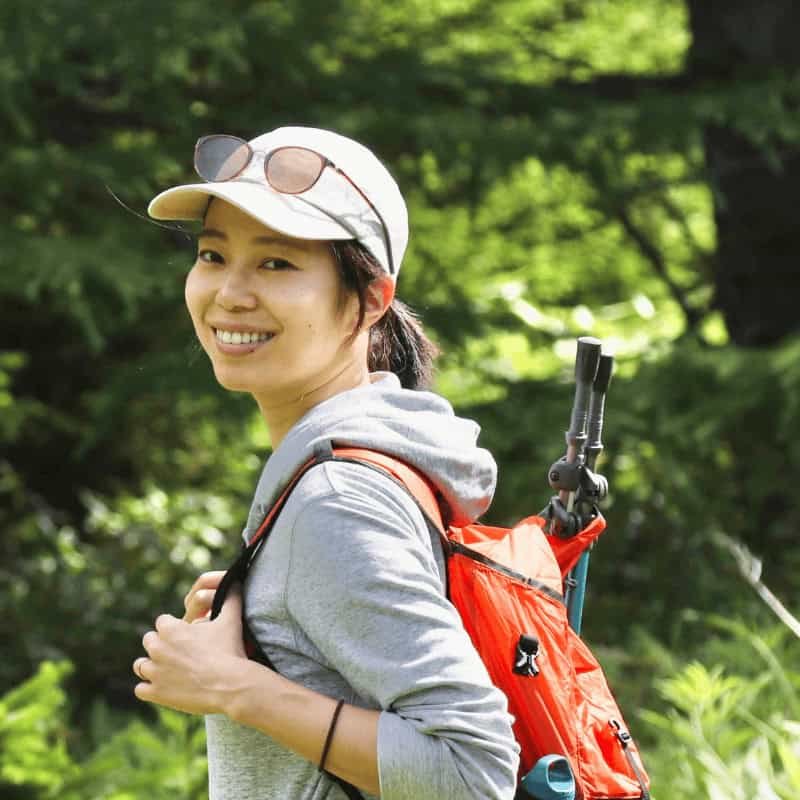
As a local, I lived and traveled around Hokkaido for over 20 years. I packed my favorite spots that I’ve visited over many winters — I’m sure you’ll love them too!
Now, I’ll walk you through the itinerary step by step!
Hokkaido Winter Itinerary Overview
Eastern Hokkaido offers a variety of beautiful natural spots and winter outdoor activities. If you are looking for a getaway destination away from the crowds, this is the perfect region for you to spend a week in winter.

This Hokkaido winter itinerary starts from Memanbetsu Airport and could end at either Kushiro Airport or back to Memanbetsu Airport. For the 6 nights, you will be staying…
- Two nights in Abashiri
- Two nights in Shiretoko
- One night in Kushiro
- One night in Lake Akan
The best time to fully enjoy all the activities included in this winter itinerary is between early February to mid-March.
✨ Got 10 days to spend? Follow this 10-day winter adventure itinerary instead!
Day 1: Head to Abashiri
Abashiri is a port city along the coast of the Okhotsk Sea, offering many tourist attractions ranging from nature reserves to museums.
It also has beautiful nature as well as fresh seafood thanks to its direct access to the sea and lakes. Drift ice (Ryuhyo) filling up the coast is the must-see during winter!
How to get there
This Hokkaido winter itinerary starts at Memanbetsu Airport. Once arriving at the airport, quickly go to the Tourist Information Center and get Abashiri Free Pass for 2 days (2,000 JPY). This pass will save you a little bit of money if you follow this itinerary while you’re in Abashiri.
Then take a bus to Abashiri, which departs shortly after every arrival flight. The bus will take about 40 min and costs 1,050 JPY to JR Abashiri Station.
If you don’t have a Free Pass, make sure to have cash in hand. Many buses in Hokkaido don’t accept credit cards!
Now check in at your hotel, and take a rest or explore the city.
Where I always stay in Abashiri: Hokuten no Oka

A cozy onsen resort hotel that my family and I love.
✅ Relaxing onsen & free hot stone spa
✅ High-quality buffet with local ingredients
✅ Interior designes inspired by the regional culture
Day 2: Drift icebreaker ship & museum hopping
Drift icebreaker ship
The icebreaker ship, “Aurora,” is an absolute must when you’re in Abashiri during winter! The coastline of Abashiri is covered by drifting ice that comes from Russia’s Amur River and travels through the Okhotsk Sea.
What makes this ride thrilling? The Aurora sails through the icy sea, and you can observe it up-close from the terrace.

The ship operates 4-5 times daily between late January to March. Tickets get booked out quickly, so make sure to book yours well in advance on the official website.
To get to the ship dock, take a bus from JR Abashiri Station to the Aurora Terminal for 230 JPY. If you have a Free Pass, you can get a free coffee at a store inside the ship!
Just a 3-min walk away from the Aurora Terminal, check out this cute local glass craft shop, or join a workshop to make your own glass cup.
Museum hopping
After the ride, visit some of Abashiri’s unique museums. They can be easily reached by bus.
- Abashiri Prison Museum: Open-air museum featuring preserved prison buildings from the Meiji era. You can learn how inmates helped develop Hokkaido.
- Drift Ice Museum: Dedicated to Abashiri’s iconic winter drift ice, includes a -15°C ice room, marine life exhibits, and an observatory with panoramic views.
- Northern Peoples Museum: Highlights the culture and lifestyle of the Ainu and other northern indigenous groups. Free English audio guides available.
>> Read more about these museums on this 3-day Abashiri itinerary.
Stay overnight in Abashiri
Day 3: Head to Shiretoko
Shiretoko is a peninsula in Eastern Hokkaido, blessed with its spectacular nature remained untouched. The Shiretoko National Park covers two-thirds of the peninsula, offering many nature activities. This is a perfect destination for outdoor lovers!
How to get there
Let’s head to Utoro, which is a small port town on the Shiretoko Peninsula and the center of the Shiretoko tourism.
From late January to early March, Shiretoko Airport Liner bus directly connects Abashiri and Utoro, and this is the most convenient transportation during winter. It takes just one hour 40 min and costs 2,800 yen. It runs twice a day, once in the morning and another in the afternoon.
If the airport liner is not available, you can also take a train from Abashiri to Shiretoko Shari Station (970 yen, 50 min) and then take a bus to Utoro (1,650 yen, one hour).
On the train from Abashiri, you will see drift ice filling up the coastal line between early February to mid-March.
Once you arrive in Utoro, enjoy onsen (hot spring) at your hotel, just relax, and get ready for tomorrow’s activity!
Where I’ve stayed: Shiretoko Daiichi Hotel

A mid-range onsen hotel that my whole family loved!
✅ Kid-Friendly: Indoor heated pool & Toy area
✅ Great buffet with many local dishes
✅ Spacious onsen with a bath for kids
If you want a local stay: Sekka Shiretoko

A small, cozy family-run onsen hotel in nature
✅ Friendly owner like your auntie
✅ Delicious homemade meals using local ingredients
✅ High-quality hot spring water

New Travel Guide!

Plan your perfect trip with local gems and zero tourist traps.
✅ Local spots you won’t find anywhere else
✅ Skip tourist traps so you stop wasting time and money
✅ Travel like you have a local friend showing you around
Day 4: Winter Adventures in Shiretoko
Drift Ice walk
A drift ice walk is one of the most unforgettable experiences in Shiretoko during winter. Between February and March, you’ll get the chance to walk on the frozen sea, in a special dry suit that keeps you warm.

Local guides will lead you to the perfect spot to see the drift ice up close and even allow you to float in the icy waters! It may sound intense, but don’t worry, this is a beginner-friendly, safe activity.
The tour lasts about 1.5 hours and costs around 8,000 JPY per person. It’s essential to join a guided tour as it’s not allowed to go on drift ice without a guide.
A few things to note:
- The drift ice doesn’t always make it to shore on schedule, so tour cancellations can happen if the conditions aren’t right.
- These tours have become quite popular recently, so booking in advance is highly recommended!
- Popular tour operators include Shinra and Gojiraiwa Kanko.
Snowshoeing
If you still have energy after the drift ice walk, try snowshoeing in the Shiretoko National Park!
You can rent snowshoes, trekking poles, and rubber boots (550 JPY each) at the Shiretoko Nature Center. Don’t forget to bring thick socks to keep your feet warm.
Once you’re geared up, head out to the trail behind the Nature Center. It’s an easy 2 km round trip that takes about an hour. You’ll walk through peaceful forests and across wide snowfields.

The trail leads to an observation deck where you can view the frozen Furepe waterfall, drift ice on the sea, and the snow-capped Shiretoko mountain range. Along the way, you might see sea eagles or a pack of Ezo deer.
Stay overnight in Utoro, Shiretoko
Day 5: Explore Kushiro
How to get there
Kushiro is a port town facing the Pacific Ocean in the southern part of Eastern Hokkaido. Take a bus from Utoro to Shiretoko Shari Station (1,650 yen, one hour) and a train to Kushiro (3,190 yen, 2.5 hours).
If you have time before getting on a bus in Utoro, check out Michi no Eki Utoro (roadside station) for local products and souvenirs! It’s just 5 min walk from the bus station.
Things to do in Kushiro
- Washo Seafood Market: A must-visit to experience a local fish market and make your own seafood rice bowl.
- Fisherman’s Wharf Moo: A shopping center full of local souvenirs and restaurants. There are tourist information exhibitions as well.
- Eat Robata – Robata is a local signature in Kushiro. It’s a Japanese-style seafood BBQ. It will make a nice winter dining experience to warm up yourself!
Where to stay in Kushiro
-
ANA Crowne Plaza Hotel Kushiro
⭐3 stars, 🏢Excellent Location, ✨Modern Design
Conveniently located near JR Kushiro Station, offering great guest services and a breakfast buffet using fresh local ingredients. -
Comfort Hotel Kushiro
⭐3 stars, 🍴Free Breakfast, 🏢Excellent Location
A modern city hotel just a 2-minute walk from JR Kushiro Station.

Day 6: Enjoy hot spring in Akan
How to get there
Akan is a small, cozy onsen (hot spring) town sitting right next to Lake Akan. Any onsen lovers will love staying here and enjoy lake-view dips.
To get there, take a bus from Kushiro Station to Lake Akan (2,750 yen, one hour).
If you like birdwatching, get off the bus at Tancho no Sato and visit Akan International Crane Center to see wild red-crowned cranes that migrate to this area every winter. You can catch the next bus to Akan with the same bus ticket.

Things to do in Akan
Between mid-January and late March, the frozen Lake Akan offers many fun winter activities (listed below). In the evening, you can also enjoy a traditional performance of Ainu, the indigenous peoples of Hokkaido, followed by fireworks.
Get your warm jacket and go active! This is a perfect way to spend a day for outdoor lovers and families with kids. I have a detailed Akan itinerary here for more info.
- Ice fishing (and tempura the fish at a nearby restaurant!)
- Snowmobile
- Banana boat
- Cross-country ski
- Ice skating
Where I always stay in Akan: The Forest Akan

A mid-range onsen hotel that I keep going back to for years.
✅ Right by the lake, near a nature walk trail
✅ Free access to 2 onsen facilities
✅ Not a large resort hotel = No big crowds
The Best Family & Tattoo-Friendly Hotel: New Akan

A mid-range onsen hotel that I keep going back to for years.
✅ Enjoy a rooftop mix-gender onsen as a family
✅ Bathing wear provided
✅ Buffet with wide variety

Day 7: Head back to the airport
Now it’s time to wrap up your winter trip in Eastern Hokkaido! The closest airport to Akan is Kushiro Airport. You can just take a bus from Akan to Kushiro Airport (1-1.5 hours, 2,190 yen).
In case you book round-trip flights to/from Mamanbetsu, you will take a bus to Kitami (one hour, 2,100 yen, booking is required at the bus stations in Kushiro or Akan) and change to another bus to Memanbetsu Airport (40 min, 1,200 yen).
If you want to continue your trip, you can take a train from Kushiro to places like Obihiro and Sapporo.
Your next steps
Hope this Hokkaido winter itinerary helps your trip planning!
Want more winter trip ideas? Winter festivals are amazing in Hokkaido, so don’t miss out. If you’re on a budget, this 5-day winter itinerary will show you how you can travel affordably.

Plan your perfect trip with local gems and zero tourist traps.
✅ Fill your itinerary with local favorites you won’t find anywhere else.
✅ Know exactly which tourist traps to skip so you stop wasting time and money.
✅ Experience Eastern Hokkaido like you have a local friend showing you around.
Need a local friend’s help on your itinerary?
Don’t waste hours researching. I’m here to help you like that local friend who tells you:
“Go here, skip that, and don’t miss this little place.”
As a local expert, I’ve helped 350+ international travelers plan their personalized itineraries over the years.
Want my insider tips?