10-Day Hokkaido Winter Itinerary (No-Car Guide)

If you’re looking for a slower, more authentic way to spend 10 days in Hokkaido during winter, this itinerary is for you!
Hi, I’m Yuuka. I grew up in Eastern Hokkaido and have spent years exploring this beautiful rural region. This guide pulls together the routes I recommend most to travelers, full of unique winter activities in nature.
Here you’ll find drift ice filling up the coast in Abashiri and Shiretoko, cranes dancing in the snow in Kushiro, steaming hot spring towns in Akan and Kawayu, and cozy port cities where you find the freshest seafood.
And the best part of this itinerary? No car needed! I designed this 10-day trip entirely with public transportation— just trains and buses.
(Trust me, unless you’re experienced with the snowy icy roads, I don’t recommend driving here.)
Let’s start planing your winter adventure!
Hokkaido Winter Itinerary Overview

Eastern Hokkaido is a perfect destination for winter travelers who want more than just ski resorts. Here, you’ll find frozen seas, hot springs by lakes, and outdoor adventures that feel far away from the tourist crowds.
Your trip begins at Memanbetsu Airport and can wrap up either at Kushiro Airport or back to Memanbetsu Airport. Over 9 nights, you’ll be staying:
- 2 nights in Abashiri
- 2 nights in Shiretoko
- 1 night by Lake Kussharo
- 2 nights in Kushiro
- 2 nights in Lake Akan
💡 When to go: The sweet spot for this trip is from early February to mid-March to enjoy all the activities included.
Day 1: Arrival in Abashiri
Your winter adventure begins in Abashiri, a small port city on the coast of the Okhotsk Sea. In winter, it’s famous for Ryuhyo (drift ice) covering the coastline, but you’ll also find unique museums and incredible seafood here.
Getting to Abashiri
This itinerary starts at Memanbetsu Airport. After landing, stop by the Tourist Information Center right after the arrival gate, and get the Abashiri Free Pass (2,000 JPY for 2 days). It’s a handy pass that saves you money if you follow this plan!
From the airport, you can catch the airport bus to Abashiri. Buses are timed with flight arrivals, and the ride takes about 40 minutes to JR Abashiri Station. A one-way ticket costs 1,050 JPY.
💡 Travel tip: If you don’t have the Free Pass, keep some cash ready. Many buses in Hokkaido still don’t take credit cards.
Once you arrive, check into your hotel and take a little break. Depending on your energy level, you can either rest up in onsen for tomorrow or head out for a short walk to get your first taste of the city.
Where I always stay in Abashiri: Hokuten no Oka

A cozy onsen resort hotel that my family and I love.
✅ Relaxing onsen & free hot stone spa
✅ High-quality buffet with local ingredients
✅ Interior designes inspired by the regional culture
Day 2: Drift Ice Adventure & Museum Hopping

Drift Icebreaker Ship
A winter trip to Abashiri isn’t complete without a ride on the Aurora drift icebreaker! Every year, ice from Russia’s Amur River floats across the Sea of Okhotsk, filling up the coastline of Eastern Hokkaido.
The Aurora pushes through this frozen sea, and you can watch the ice crack and shift right below you. Standing on the open deck makes it even more thrilling!
The ship runs 4–5 times daily from late January to March, but tickets sell out fast. Be sure to book online in advance to secure your spot.
Getting there is easy. Just take a bus from JR Abashiri Station to the Aurora Terminal (230 JPY). If you’re using the Free Pass, you’ll also get a little bonus: a free coffee inside the terminal cafe.
💡 Extra stop: Just a short walk from the terminal, there’s a charming glass craft shop where you can browse local works or even try making your own cup.
Museum Hopping
After your icy adventure, warm up indoors and explore Abashiri’s unique museums. They are easily accessible by bus, and each one offers a different glimpse into the region’s history and culture:
- Abashiri Prison Museum – An open-air site with original Meiji-era prison buildings. You can learn how inmates played a role in Hokkaido’s early development.
- Drift Ice Museum – A hands-on museum where you can step into a -15°C/5°C room and touch the real drift ice, see marine life, and enjoy views of the Sea of Okhotsk at the rooftop observatory.
- Northern Peoples Museum – Dedicated to the cultures of the Ainu and other northern indigenous groups. Free English audio guides are available.
👉 You can find more museum details in my 3-day Abashiri itinerary.
Stay the night in Abashiri
Day 3: Head to Shiretoko
Today you’ll make your way to Shiretoko, a remote peninsula and one of Japan’s last untouched wilderness areas. With two-thirds of the land protected as Shiretoko National Park, this UNESCO World Heritage Site is great for anyone who loves wild landscapes, hot springs, and winter adventures.
Getting to Utoro
Your base in Shiretoko will be Utoro, a small fishing port and the hub for exploring the peninsula.
- Shiretoko Airport Liner (late Jan–early Mar): The easiest option in winter is this direct bus from Abashiri to Utoro. The ride takes 1 hr 40 min, costs 2,800 JPY, and runs twice daily (morning and afternoon).
- Alternative route: Take a train from Abashiri to Shiretoko Shari Station (970 JPY, 50 min), then transfer to a bus for Utoro (1,650 JPY, 1 hr).
💡 Don’t miss this: On clear days in February to mid-March, you’ll see drift ice stretching along the coastline from your train window!
Once you arrive, check into your hotel and sink into a relaxing onsen bath. This is the perfect way to rest up and prepare for the exciting activities waiting for you tomorrow.
If you have time, also check out Roadside Station Shirietok near the bus terminal. They have a wide range of local products and souvenirs. It’s so fun to shop here!
Where I’ve stayed: Shiretoko Daiichi Hotel

A mid-range onsen hotel that my whole family loved!
✅ Kid-Friendly: Indoor heated pool & Toy area
✅ Great buffet with many local dishes
✅ Spacious onsen with a bath for kids
If you want a local stay: Sekka Shiretoko

A small, cozy family-run onsen hotel in nature
✅ Friendly owner like your auntie
✅ Delicious homemade meals using local ingredients
✅ High-quality hot spring water
Day 4: Winter Adventures in Shiretoko

Drift Ice Walk
Walking on the frozen sea is one of the most unique winter experiences you can have in Hokkaido! And this is one of my favorite winter activities.
It’s usually available from early February to mid-March, but this depends on the ice condition of the year.
You have to join a guided tour for this, and local guides will take you to the safest spots, explain the local environment, and even let you float in the icy water! No worries, you won’t get wet in your thick dry suit. It may look extreme, but it’s beginner-friendly and completely safe.
- Duration: About 1.5 hours
- Cost: Around 8,000 JPY per person
- Tour operators: Shinra and Gojiraiwa Kanko
💡 Good to know:
- Drift ice doesn’t always reach shore on time, so tours may be canceled depending on conditions.
- These tours are very popular. Make sure to book ahead!
- It’s not allowed to go onto the ice without a guide.
Snowshoeing in Shiretoko National Park

Still have energy after your ice adventure? Rent some gear at the Shiretoko Nature Center (snowshoes, trekking poles, and boots are 550 JPY each) and head out on a gentle snowshoe trek. Don’t forget thick socks for extra warmth.
The easy 2 km loop trail behind the center takes about an hour. You’ll walk on wide open snowfields, and might spot some Ezo deer or even a sea eagle overhead.
The highlight on this trail is the viewing deck overlooking the frozen Furepe Waterfall, the drift ice floating offshore, and the snow-covered Shiretoko mountain range.
Stay the night in Utoro
Want an itinerary like this made for you?

👋Hi, I’m Yuuka, your go-to Hokkaido travel advisor.
✅ I design a custom itinerary for you.
✅ 300+ travelers supported
✅ Insider tips you won’t find on Google
Day 5: Kawayu Onsen
Today is all about slowing down in Kawayu Onsen, small hot spring town sitting between Lake Kussharo and Lake Mashu.
Getting There
From Utoro, take a bus to Shiretoko Shari Station (1,650 JPY, 1 hr), then transfer to a train to Kawayu Onsen Station (1,210 JPY, 50 mins).
What’s special about Kawayu Onsen?
Kawayu Onsen has been loved by locals as a healing hot spring for many centuries. It’s not as famous as Noboribetsu or Jozankei, but among onsen fans it’s considered a hidden gem.
The secrets are…
- 100% natural from the source — the town has declared no filtering or added-water, so every bath is natural, fresh, and direct from the source.
- Strongly acidic (but safe!) — known for its antibacterial effects and leaving your skin so smooth.
- Rich in sulfur — adds moisturizing benefits.
Onsen Stream Terrace
At the heart of the onsen town is the newly renovated a river-side onsen stream terrace (opened in October 2024). Hot spring water flows in this river straight from a nearby volcano, Mount Io, where underground magma heats the springs.
In Kawayu Onsen town, you can stroll along the 200-meter hot spring stream, relax on wooden decks and benches, and dip your feet into a steaming footbath.
In the evening, the walkway is beautifully lit up. A perfect spot for a night walk!
Where to stay near Lake Kussharo and Lake Mashu
-
Kussharo Prince Hotel
⭐4 stars, ♨️Hot Spring, 👀 Beautiful View
A long-established hotel with lake-viewing onsen. -
Kawayu Kanko Hotel
⭐3 stars, ♨️Hot Spring
A local hotel known for its high-quality natural hot spring, serving local cuisine dining. -
Pension Polaris
⭐2 stars, 🍴Local Ingredients, 🧡Amazing Hospitality
A cozy lodge-style accommodation near Lake Mashu, offering a beautiful stargazing location.
Day 6: Mount Io & Lake Mashu
Today you’ll explore two beautiful lakes in the area, before continuing on to Kushiro.

Winter Bus Route
From JR Kawayu Onsen Station, hop on the Kussharo Bus (operates seasonally—Jan 25 to Mar 2 in 2025; check for 2026 updates). You can buy a combined ticket for both buses on board for 2,000 JPY.
The ride includes short scenic stops:
- Mount Io (a 20–25 min stop) – An active volcano with steaming vents and the smell of sulfur in the air.
- Sunayu (a 15 min stop) – A sandy lakeshore on Lake Kussharo. You’ll see wild swans enjoying the warm water here in winter.
The bus ends at JR Mashu Station, where you transfer to the Mashuko Bus. This route brings you up to the Lake Mashu Observatory.
Here, you’ll have about 25–30 minutes to enjoy the view and visitor terrace before the same bus takes you back down to JR Mashu Station.

Continue to Kushiro
After returning to JR Mashu Station, take a train to Kushiro Station (2,020 JPY, 80 min).
Stay overnight in Kushiro
Where to stay in Kushiro
-
ANA Crowne Plaza Hotel Kushiro
⭐3 stars, 🏢Excellent Location, ✨Modern Design
Conveniently located near JR Kushiro Station, offering great guest services and a breakfast buffet using fresh local ingredients. -
Comfort Hotel Kushiro
⭐3 stars, 🍴Free Breakfast, 🏢Excellent Location
A modern city hotel just a 2-minute walk from JR Kushiro Station.
Alternative Route: Winter Pirika Tour Bus
Another option is to take the Winter Pirika sightseeing bus. With this route, you can skip Day 6 and Day 8 of the itinerary and still see the highlights.
For this alternative route, you go directly from Shari to Kushiro by train, stay overnight in Kushiro, and then join the bus to visit the main sights around Lake Kussharo and Lake Mashu before arriving in Akan.
The bus departs 8:30 am from JR Kushiro Station and makes stops at:
- Tsurumidai Observatory – to watch red-crowned cranes in the wild
- Sunayu Beach, Lake Kussharo – famous for swans and hot spring sand
- Mount Io – steaming vents and volcanic scenery
- Lake Mashu Observatory – stunning views over the caldera lake
You’ll have time to explore each stop before continuing. The bus reaches Lake Akan Onsen around 3:15 pm, where you can get off and check into your hotel.
This option is convenient for covering a lot in one day, but keep in mind it’s a guided group tour, so it feels more touristy compared to traveling independently. Seats also book up fast, so make reservations early.
New Travel Guide!

Plan your perfect trip with local gems and zero tourist traps.
✅ Local spots you won’t find anywhere else
✅ Skip tourist traps so you stop wasting time and money
✅ Travel like you have a local friend showing you around
Day 7: Kushiro

Kushiro is a vibrant port town on the Pacific Ocean, known for its seafood, vast marshlands, and the elegant red-crowned cranes that call this region home in winter.
Washo Seafood Market
Start your day at Washo Seafood Market, where you can build your own katte-don, a seafood rice bowl topped with your favorite fresh catches from the stalls. It’s a unique Kushiro experience!
Kushiro Marshland Observatory
From JR Kushiro Station, take a local bus toward Green Park Tsurui and get off at Shitsugen Tenboudai (about 40 min). This is the closest observatory to the city, offering sweeping views of Japan’s largest marshland.
- A 1 km walking trail leads to the Satellite Observatory, where you can see the marsh up close. Allow 30 minutes for just the observatory or 1.5 hours if you walk to the Satellite Observatory.
- In winter, the trail can be slippery and may take longer. Walk carefully!
- There’s an on-site restaurant to warm up with light meals.
Crane Watching at Tsurumidai
Hop back on the bus toward Green Park Tsurui and get off at Tsurumidai (about 20 min from the observatory). This open field is a famous winter feeding ground for the red-crowned cranes, where you can often see dozens of them from December to March.
You’ll usually have 30–50 minutes here (depending on the bus schedule) before the next bus returns toward JR Kushiro.
⚠️ Important: Stay only in designated areas, never use flash to take photos, and don’t leave any food or trash. Locals have worked for years to build trust with the cranes here. Please help protect that relationship. Read the official rules for crane observation here.
Evening: Waterfront & Dinner
Back in the city, you can spend the evening at Fisherman’s Wharf Moo, a waterfront complex with shops, restaurants, and a small tourist information corner. It’s a good stop for souvenirs or simply warming up indoors.
For dinner, try robata-yaki, Kushiro’s signature style of charcoal-grilled seafood. They will grill fresh seafood in front of you, which is the perfect way to warm up on a winter night.
Stay overnight in Kushiro
Day 8: Akan

Akan is one of my favorite places for a onsen stay in Eastern Hokkaido! This cozy hot spring town sits right beside the lake, and many hotels have baths with lake views.
Akan is also home to one of the biggest Ainu communities (Hokkaido’s indigenous people).
Getting There
From JR Kushiro Station, take a direct bus to Lake Akan Onsen (2,750 JPY, about 1 hr).
💡 Optional stop: If you skipped Tsurumidai in Kushiro, there’s another option for crane watching here. Hop off the bus at Tancho no Sato to visit the Akan International Crane Center. With the same ticket, you can catch the next bus on to Lake Akan.
Winter Fun on the Frozen Lake
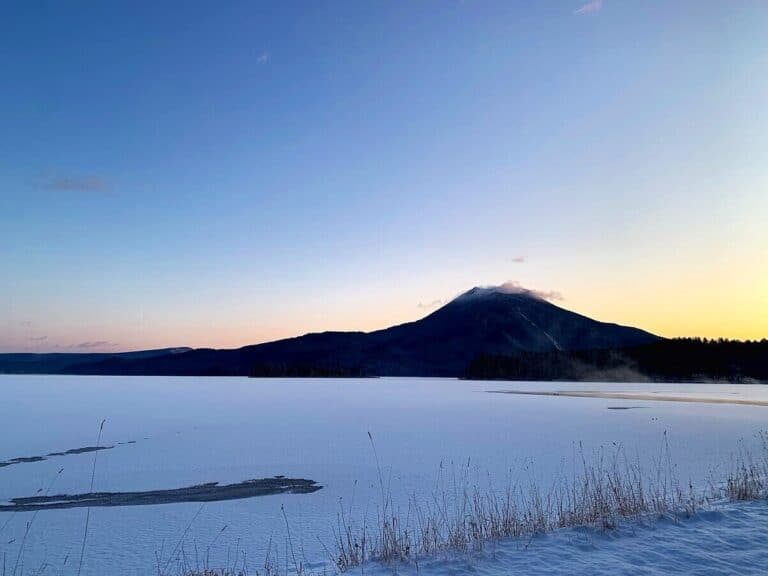
In winter, Lake Akan completely freezes over, turning into a natural playground! From mid-January to late March, you can try:
- Ice fishing – Catch smelt and have it deep-fried into crispy tempura right after.
- Snowmobiling – Speed across the frozen lake. No worries, it’s beginner friendly!
- Banana boat rides – Fun for families and groups.
- Cross-country skiing – Glide through snowy trails at your own pace.
- Ice skating – A classic way to enjoy the frozen lake!
In the evenings during February, you can experience local culture with an Ainu traditional dance performance and watch fireworks on the frozen lake.
Stay overnight in Lake Akan Onsen
Where I always stay in Akan: The Forest Akan

A mid-range onsen hotel that I keep going back to for years.
✅ Right by the lake, near a nature walk trail
✅ Free access to 2 onsen facilities
✅ Not a large resort hotel = No big crowds
The Best Family & Tattoo-Friendly Hotel: New Akan

A mid-range onsen hotel that I keep going back to for years.
✅ Enjoy a rooftop mix-gender onsen as a family
✅ Bathing wear provided
✅ Buffet with wide variety
Day 9: Akan

Lakeside Morning Walk
Yes, it’s freezing in the early morning, but the sunrise over the frozen Lake Akan is absolutely worth it. Many hotels have direct lake access, so check when you book a hotel if they do. Otherwise, you can reach the shore from the public parking area.
And the best part? Warming back up in a hot spring right after!
Ainu Village
While you are in Akan, make sure to visit Ainu Kotan located just a short walk from the main street.
The Ainu are the indigenous people of Hokkaido, and this community is home to around 120 residents, one of the largest Ainu settlements on the island.
Here, you’ll find traditional craft shops selling woodcarvings and textiles, as well as a museum and theater with exhibitions on Ainu history and culture. It’s a chance to learn about traditions that are still alive today.
Snowshoeing in Bokke Trail
Winter in Akan is perfect for exploring the snowy forest trails. One of the best options is the Bokke Trail, which starts behind the Visitor Center.
Rent snowshoes or cross-country skis at the center (1,200 JPY/2 hrs, including boots and poles). Regular shoes won’t be enough as snow often reaches 50 cm to 1 meter deep here! With the right gear, you’ll move easily through the snow.
Along the way, you might spot Ezo deer or even a red fox, since many animals here don’t hibernate. At the far end of the trail, you’ll find what we call Bokke, steaming volcanic mud ponds, and beautiful views of Mount Oakan and the frozen lake.
Stay overnight in Lake Akan Onsen
Day 10: Head Back to the Airport
Your winter trip through Eastern Hokkaido comes to an end today. The closest airport to Lake Akan is Kushiro Airport, and the direct bus from Akan will get you there in about 1–1.5 hours (2,190 JPY).
If you’re flying round-trip via Memanbetsu Airport, take a bus to Kitami (1 hr, 2,100 JPY, advance booking required at the Kushiro or Akan bus station), then transfer to another bus to the airport (40 min, 1,200 JPY).
Not ready to leave yet? You can also continue your adventure by train from Kushiro toward Obihiro or Sapporo.
Want an itinerary like this made for you?
👋Hi, I’m Yuuka, your go-to Hokkaido travel advisor.
✅ I design a custom itinerary for you.
✅ 300+ travelers supported
✅ Insider tips you won’t find on Google
Your Next Steps
I hope this 10-day winter itinerary help you kick-start your Hokkaido trip planning!
If you need help to plan your itinerary, I’m here to support you.
If you don’t have a full 10 days, this 7-day winter trip is a quicker version but still full of winter fun.
Traveling on a tighter budget? My 5-day winter itinerary shows you how to experience the region affordably.
Looking for more ideas? Check out my favorite winter activities and my guide to Hokkaido’s winter festivals.
Happy trip planning!

Plan your perfect trip with local gems and zero tourist traps.
✅ Fill your itinerary with local favorites you won’t find anywhere else.
✅ Know exactly which tourist traps to skip so you stop wasting time and money.
✅ Experience Eastern Hokkaido like you have a local friend showing you around.
Need a local friend’s help on your itinerary?
Don’t waste hours researching. I’m here to help you like that local friend who tells you:
“Go here, skip that, and don’t miss this little place.”
As a local expert, I’ve helped 350+ international travelers plan their personalized itineraries over the years.
Want my insider tips?